
Podcasting the Past: how to turn your PhD research into a podcast
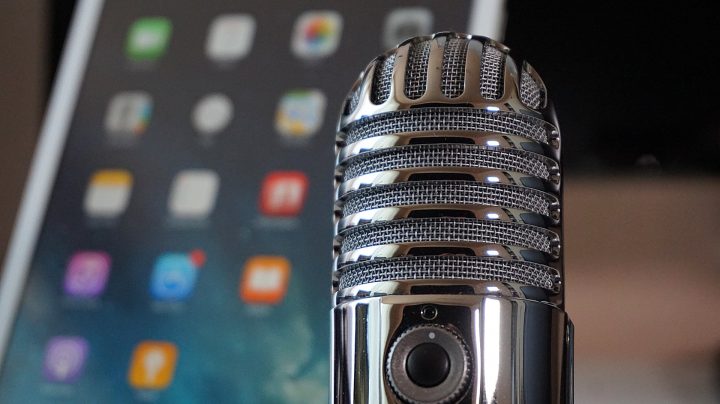
On the 24th of August, thirty AHRC funded researchers and five speakers met online for a podcasting workshop. Podcasts are currently the most popular form of modern digital audio content with 10 million podcasts registered online. Podcasts which use historical sources to illuminate the past are particularly prominent. This workshop was designed to provide students with basic skills and experience-based advice on designing and producing a podcast. Originally, our plan was to hold a two-day in-person event in Glasgow where more time could be given for our speakers and panellists. With the ongoing coronavirus restrictions, we had to re-create our workshop online. At a time where digital engagement is really being tested, podcasts are a brilliant way for researchers to disseminate their work and we hope to hear more from our colleagues across the AHRC-CDP cohort.
The day started with Steve Finan of D.C. Thomson Media who discussed his involvement with the podcast Pass It On! He shared the process of turning his interest in domestic advice columns in the Sunday Post from the 1950s into a book and then into a podcast. He showed how sources from the recent past can be discussed in a light-hearted, conversational manner, and are linked to people’s everyday lives in the present day.
Next we heard from Jenny and Annie who write, research and produce the Stories of Scotland podcast. Combining their historical and geological knowledge and expertise, inspired by Scotland’s storytelling tradition, Stories of Scotland is about all sorts of stories from Scotland’s past and present. Their first-hand experience using libraries, archives, museums, and historical newspapers demonstrated how historical sources can be brought to life with some creativity and good humour. We hope their storytelling format inspired our participants to think about the different ways they can present their research.
At that point we also discussed things like time, and how much preparation goes into producing a podcast. We found that it really depends what you want to do, how it will sound, and whether it is scripted.
Michael Park runs another podcast on Scottish history, although it is a little different in tone and style. A single speaker, Michael is inspired by horror to tell dramatic histories of Scotland. It’s all in the tone of voice! His podcasts are short deep-dives into obscure, overlooked but nonetheless fascinating episodes in Scottish history, and showed our participants how the tiniest find or discovery can be fleshed out into a full podcast. Michael also shared some more practical tips on addressing audience, funding, advertising, and finding music to complement his voice clips.
Finally, Halina Rifai, of Podcart, and music podcast One More Tune, shared extremely helpful and practical guidance on the practicalities of recording a podcast. Halina showed that, with basic recording and editing equipment (much of which is compatible with current smartphones) anyone can make a podcast. It’s great to know we don’t need to be too tech savvy! Halina also provided some advice on approaching an audience and creating a podcast ‘brand’. Pitching your podcast right really helps to get it heard, while building a brand improves its recognisability, and chances of return listeners. Done well, the podcaster can create a whole community of listeners.
We then broke into groups for what was intended to be a brain-storming session. Unfortunately, this is where the online session format got the better of us. The workshop had originally been planned as a two-day in-person event, with more time to plan and produce a podcast in groups. With Covid-19 limitations, we had to try to re-create the discussion element online. In full honesty, this section was not as successful as hoped. Discussion was interrupted by connection problems and a stop-start approach to discussion. However, we hope that in the future a similar in-person event can be held and that the collaborative element of the day might be picked up again. Any attendees reading this – we’d still love to hear from you regards any collaborations or independent podcast efforts that you or your group are undertaking.
Overall, attendees took away some inspiration and practical advice on how to make podcasts. We hope the workshop has also raised more awareness of podcasting as a format for research dissemination. We didn’t get to discussing it, but it would be interesting to talk about podcasting as a formal mode of research output, how it might go towards ref etc. but that’s for another time. For now though, listen out for CDP voices on your favourite podcasting sites.
One of our participants, Elaine Charwat, has produced a brilliant podcast based on research into museum models, specifically models of parasites. Elaine introduces us to their historical, contemporary, and potential future uses, as objects of knowledge. Have a listen here. We hope to hear more from Elaine!
Podcasting the Past was organised by CDP students –
Georgia Vullinghs, National Museums of Scotland/Edinburgh College of Art (@history_geeks)
and Charlotte Lauder the National Library of Scotland/ University of Strathclyde (@checkpointchaz)
What some of our attendees said:
“I think it’s an interesting and fresh way of sharing our research and developing new skills!”
“As I come to the end of my 4th year and especially in these uncertain job market times, the idea of starting a podcast to have a tangible project directly after submitting is great!”
“Halina’s presentation – it was very practical and packed full of useful information not only to get started, but to develop.”
“It would be good in future post Covid restrictions to have an in person event with some recording equipment for a more practical experience.”
“I still haven’t decided whether to take the plunge into podcasting, but I think it would definitely be useful to run similar training again for next year/CDPs who couldn’t attend.”
Podcasting the Past was funded by the AHRC Student Led Activity Fund